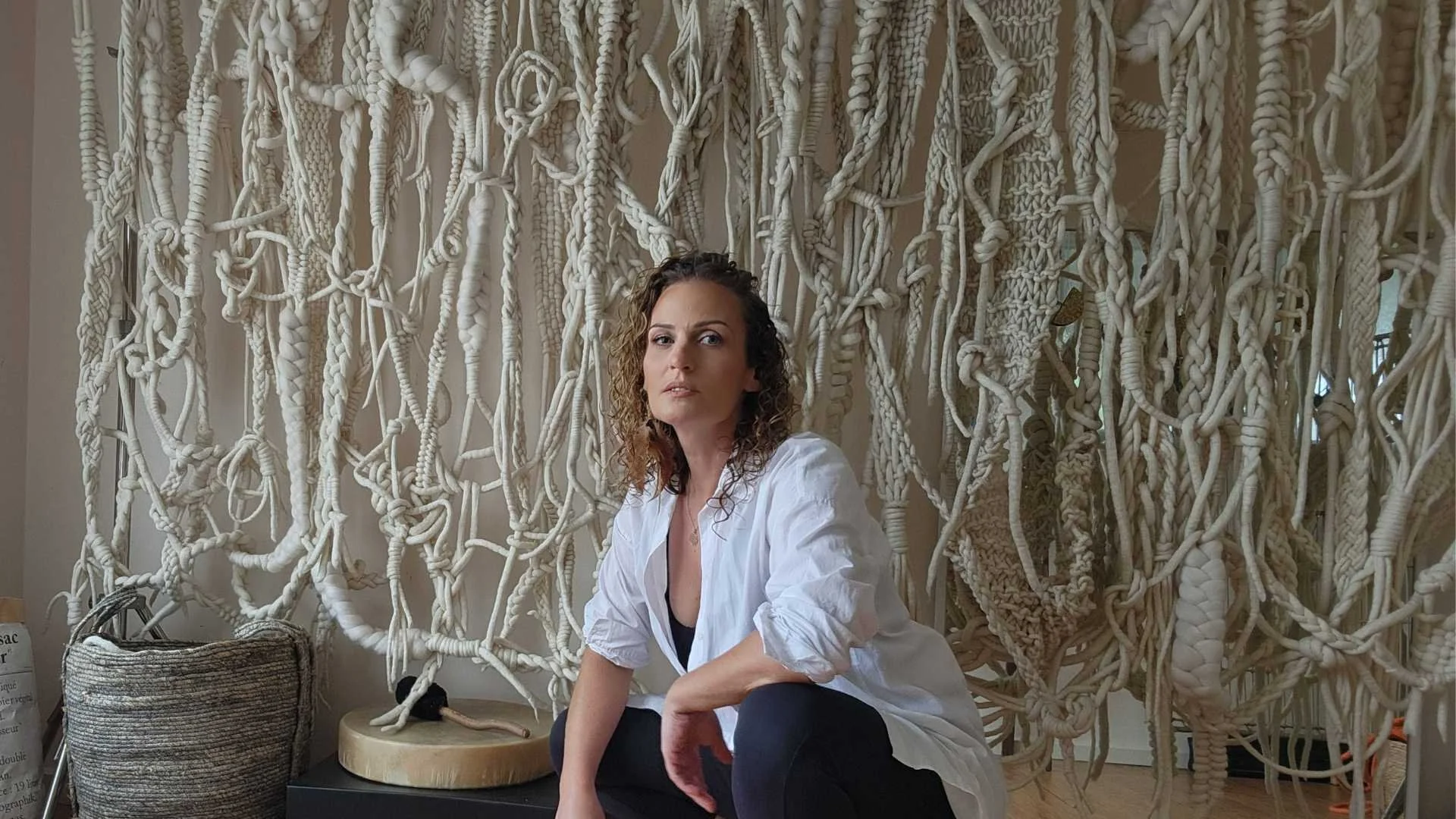
MOTHER TREE
Mother Tree — Origins & Creative Process
Place, Presence & the Intelligence of Trees
While working on The Interconnected Project, I travelled to Brisbane to present at the Women in Leadership Conference. During this time, I chose to stay beside the Brisbane Botanical Gardens — a place layered with history, culture, and living botanical archives from around the world.
The gardens offered a powerful contrast to the intensity of the conference environment. Within their boundaries, ancient trees stood as quiet witnesses to time, colonisation, regeneration, and continuity. Walking their paths each day reminded me that even in the heart of a city, land remembers. These gardens became a space of grounding — a place to breathe, soften, and reconnect with nature’s intelligence amid the structured pace of urban life.
I believe it was at this time that Mother Tree was conceived, if only as an ethereal concept.
Living With the Banyan Trees of Northeast Arnhem Land
At the time, I was living in Northeast Arnhem Land, on sacred Yolŋu Country. Around my home, banyan trees grew in their full majesty : expansive, interconnected, and alive with presence.
These were not trees I visited occasionally. They were trees I lived alongside.
Each day, I observed how their branches reached outward and downward, how roots became pillars, how light filtered through their vast canopies. I sat with them, walked beneath them, and felt their grounding force permeate the land. I often reflected on how many decades, even centuries, of wisdom they had gathered, holding stories of land, people, ceremony, and survival within their roots.
It was through this ongoing, embodied relationship that the essence of Mother Tree began to form.
A Shift in Energy & Artistic Direction
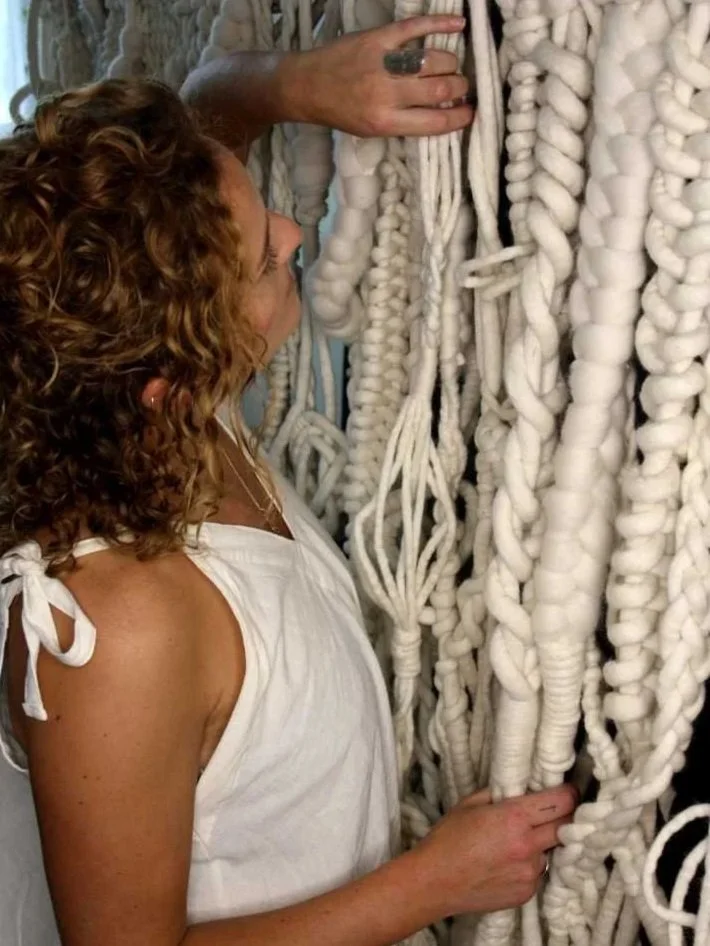
After returning from Brisbane — carrying both the stimulation of the conference and the quiet reverence of botanical spaces — I felt a significant shift in my energy and creative practice. I sensed a call to move beyond form and into frequency.
Around this time, I discovered The Frequency of Fabric, a study by Dr Heidi Yellen, exploring how materials carry distinct vibrational signatures. Her findings suggested that the human body resonates at approximately 110 mHz, similar to organic cotton, while wool vibrates at an extraordinary 5000 mHz.
This affirmed what I already knew intuitively: wool is a living, high-frequency material ,one that supports regulation, warmth, and emotional safety. From that moment, my direction became clear. I committed to creating works that not only held beauty and elegance, but that actively influenced how people feel within a space.
The Birth of Mother Tree
One day in Northeast Arnhem Land, while walking near my home, I came across a long piece of timber resting beside the path. It felt like an invitation, as though the land itself was asking to collaborate.
The timber was nearly seven metres long and incredibly heavy. After carefully cutting it down, I chose one substantial section, just under three metres (which just happened to fit perfectly along the wall of my studio!). This piece became the structural spine for what would unfold as Mother Tree over the following four to five months.
Each morning, after long walks among the banyan trees, I returned to the studio and allowed their presence to guide my hands.
An Unplanned, Intuitive Creative Process
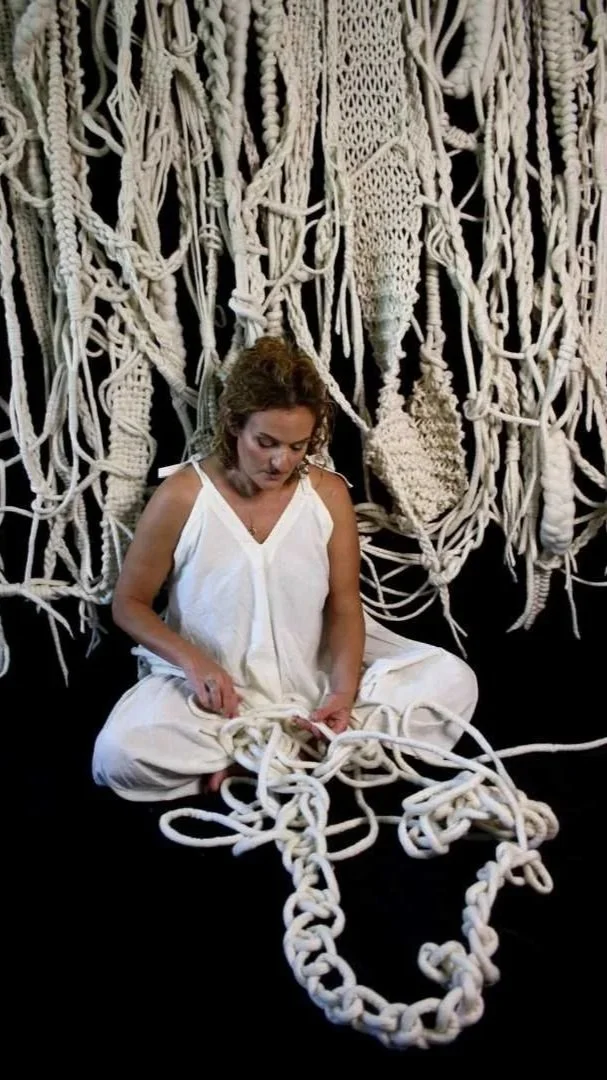
Mother Tree was not designed or planned in advance. She emerged through deep surrender and embodied trust. I stepped out of conceptual thinking and allowed my body, intuition, and materials to lead.
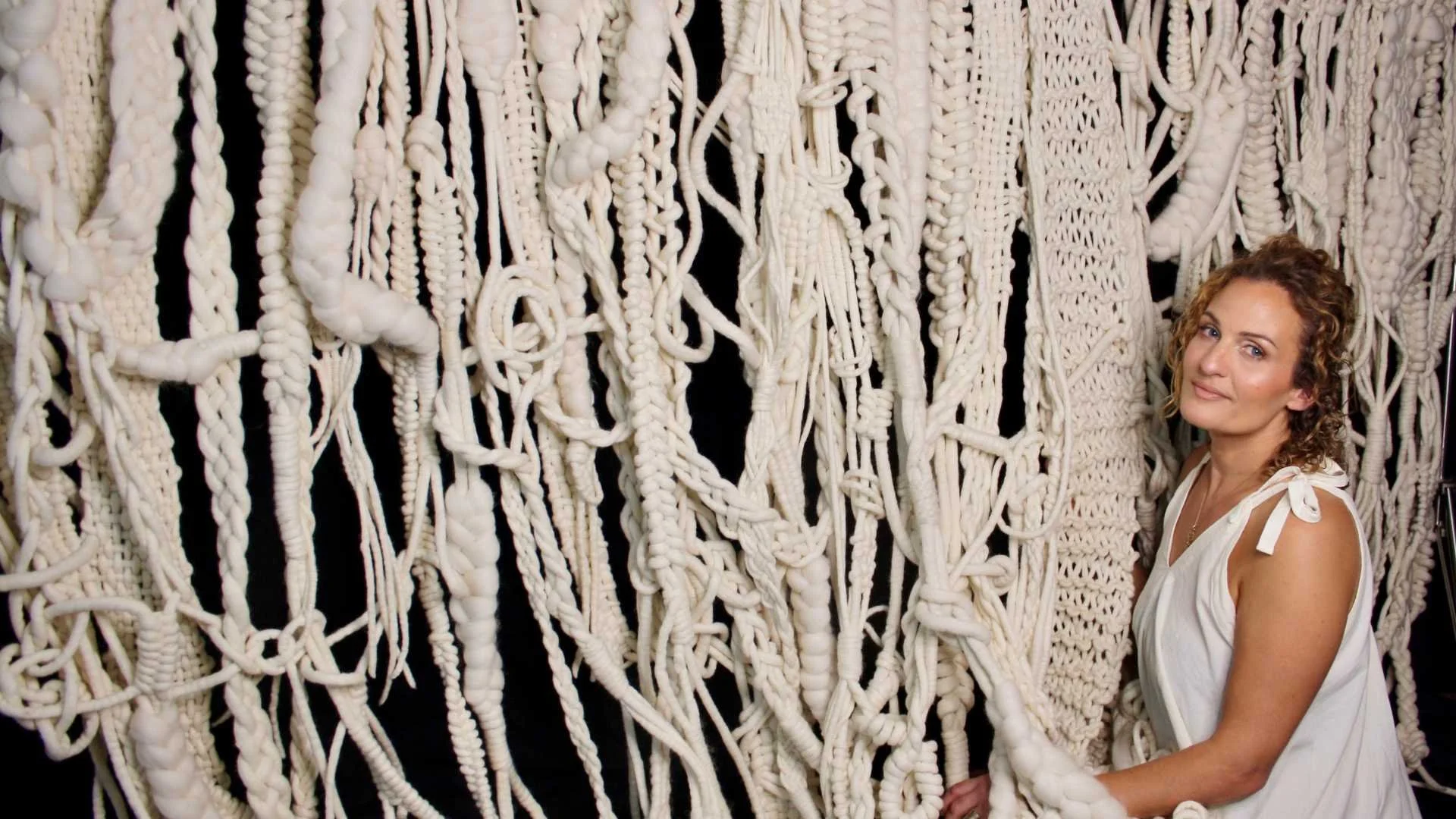
The felted wool strands were woven intuitively — layered, interconnected, and responsive — echoing the way banyan branches grow, root, and support one another. The process was devotional in nature, unfolding organically and without force.
The Energetic Impact of Mother Tree
As the installation grew, its presence began to influence the space in unexpected ways.
My dog would instinctively lie beneath her.
My children gravitated toward her when they needed comfort.
Visitors would fall quiet, pause, and simply remain in her presence.
Friends and clients often found themselves opening up vulnerably nearby — sharing experiences, grief, or uncertainty and leaving with renewed clarity and courage. Time and again, people shared that Mother Tree made them feel safe, calm, and grounded, allowing them to access their best selves from that regulated state.
Art as Living Medicine
I believe we underestimate the power of art.
When art is confined to walls and removed from touch, we strip it of its deeper potential. Art is not only to be observed — it is to be lived with, felt, and integrated into daily life.
Mother Tree is an exploration of how vibrational art can positively influence space, behaviour, and emotional wellbeing, reminding us that environments shape us just as much as we shape them.
Why the Name “Mother Tree”
The name Mother Tree was inspired by the work of Suzanne Simard, whose research revealed the intricate communication networks of forests. Her work identified “mother trees” as central beings that nurture, communicate, and sustain surrounding life through underground root systems.
This installation honours that intelligence — and the truth that we, too, are interconnected, supported, and shaped by the environments we inhabit.